Showing posts with label English. Show all posts

Saturday, 11 July 2015

Journey to Czech Republic - Dishes

Typical foods in Czech Republic are mostly fatty. But we are used to it. So, let's eat!

  • Svíčková

It is most common dish in restaurants in Czech lands. There is not an universal recipe, because each family do it in a little different way, but it has still the same taste.

In it is sirloin with vegetable sauce (root vegetable such as carrot, parsley root, onion, etc. with cream and some flour).

It is served with houskové knedlíky (kind of dumpling), whipped cream and cranberry jam. Just melt in this taste!


  • Vepřo knedlo zelo

Other favourite dish. As the name said it is pork with dumlpings and sauerkraut. 

The gravy is so tasty!

  • Smažený sýr or smažák

This is the rival of svíčková in restaurants. The name literally means fried cheese. It is slice of cheese (for example Eidam) breaded in eggs, flour, breadcrumbs (like schnitzel is covered). You can have smažák with boiled potatoes or chips.

Served with chips, vegetables and tartar sauce

  • Bramboráky 

or cmunda / vošouch (in Pilsen) 
or strik / striky (in Czech Silesia)

Grated potatoes with some seasoning fried on oil. My mum adds marjoram in it. This meal is very tasty but be careful - it is so greasy! You can eat it as a main meal or as a side dish.


Good appetit!


Your Esi Cedarwood


Monday, 9 March 2015

The Journey to Czech Silesia

Hi,
today I'm going to tell you something about the smallest historical land of Czech Republic. It is Czech Silesia, situated to the north-east. In Czech it is called Slezsko [slesko].


Small window of history

Czech Silesia was always disputed territory, bacause it is part of Silesia - the rest of this historical land is now situated in Poland. In history Bohemian Crown held whole Silesia, than Bohemian Crown was under the Habsburg Monarchy so it belonged to it. After the First Silesian War the part of Silesia which is now in Poland was token by Prussia. 

Coat of arms
Unless I've not already said that Czech Silesia was part of Sudeten area which became a part of German Reich by Munich Agreement in 1938 (it was caused by the policy of appeasement for no war, although it didn't help, obviously). Following the end of the Second World War in 1945, restored Czechoslovakia gained back Czech Silesia.

Language

Mostly around town Ostrava people speak with shortened vowels - this seems very funny for Bohemians and we call it that Ostravian people have short beaks, in Czech "Ostraváci mají krátké zobáky" and we pronounce it very shortly so it shoud be written like "Ostravaci maji kratke zobaky" because accent above the vowel means it's pronounced long. (Did you have it, understand? If you have any question write it in comments below ☺).

Dialects in Czech Silesia is mostly more resebling to Polish than to Czech. It is caused by nearness of Poland border. 

Silesian language is used in whole Silesian area. It is ranked to West Slavic lect with its reseblance to Polish, Czech and Lusatian. Silesian is sometimes called Lach.

Towns

Opava - situated to the east of Czech Silesia, former capital

Tower Hláska


Ostrava - the largest, on the Moravian-Silesian border

Ostrava is industry town

Český Těšín (Czech Teschen) - in the heart of Czech Silesia


Karviná - to the east

Jeseník - to the north-west
Jeseník is in mountains called Jeseníky

Havířov - to the east of Czech Silesia
The runner Pavel Maslák was born there
People
There is a significant Polish minority. And local people wear folk costumes. Some exaples:


So, why don't have a look in this country? It is beautiful, our little Czech Republic, the heart of Europe.

Your Esi Ceadrwood

Saturday, 31 January 2015

The Journey to Moravia

Part of Czech Repubic situated to the east - this is Moravia, the land of wine!
Moravians have an another culture, then Czechs. Not so different but it is more eastern. The national music is more sprightly and lively than the Czech's one.


The origin of name

It is simple - the river Morava pass through the Moravia, so there is the name - in Czech it's called Morava, same as the name of the river. 

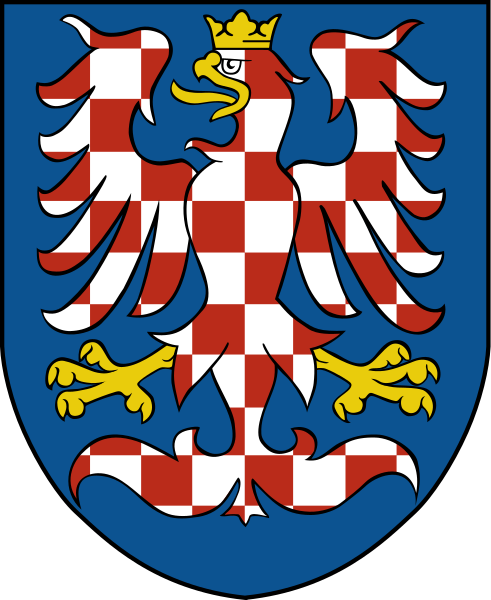
Moravian's coat of arms
(the white colour is actually silver)

Small window of  history

Moravia was individual state in the ancient Europe and it has even included Bohemia. It was called the Great Moravia. Unfortunately, it hasn't last for a long time - begins in 833 with annexation Principality of Nitra and ends in 906/907 for obscure reason. But the Great Moravia was the most powerful tribal area in these times.

Moravians and Bohemians

Yes, as in the each state there is some intolerance. It has old roots in history. Moravians don't like Bohemians. I don't know what about other Bohemians, but I have nothing against them. Maybe I like them more than us - they are more friendly and sprightly than mistrustful and carping Bohemians (in Czech we say "cold muzzles"). I think Moravians don't like us even more than we them (but I think Bohemians do not hate tham at all... but who knows.)


Vine everywhere, wine everytime

There, the most popular drink is vine. Absolutely. And than some fruit handmade hard liquor. I like the cherry one! And I want to taste the walnut one! Yummy! If you have ever gone to Moravia, don't forget to come to visit some of the wine cellar!

Wine cellar with players in national costumes!

Great for cycletourism!

County towns

  • Brno - situanted to the south of Moravia, the capital of Moravia

The second biggest town in Czech Republic
and the capital of historical land Moravia

  • Ostrava - to the north-east (small part of Ostrava lies behind the Moravian-Silesian border)
The third of the biggest towns in Czech Republic


  • Olomouc - almost in the middle of Moravia

Olomouc was the capital of ancient Moravia

  • Zlín - to the east
The town of  Baťa Shoes!

  • Jihlava - to the west
This town lies on the Bohemian-Moravian border

And there are also some other big towns, such as Frýdek-Místek, which is situated on the Moravian-Czech Silesian border (Frýdek is in Silesia, Místek in Moravia), than Přerov, Prostějov and others.


Language

There are lots of dialects, much diversed than in Bohemian area. So: the Bohemian-Moravian, the Central Moravian (Hanakian), the Eastern Moravian (Moravian-Slovak) and Lach dialect (used more in Silesia). Sometimes, they more resemble to Slovak language than to Bohemian, especially the ones which are used in the area near the Czech's-Slovakian border.

Amazing Morava river

Your Esi Cedarwood

Saturday, 24 January 2015

Today's photos ♥

It was too cold today! And I've ridden a bike to buy books. Yep, that's our mad Esi! :D
One is for me and one for my brother! :)

101 mandal pro krásný den (101 mandalas for beautiful day)


Let's colour it!

You can aslo tear out the page you like the most

The first has been coloured...

And the second book is for my brother:

Zlá hodina by Gabriel García Marquéz
(La Mara Hora in Spanish, In Evil Hour in English version)

Gorgeous dust jacket!

Zoom it and take a look at written Czech!

The last photo is my drawing for school. It have to be some letter with things with the first letter same as which you've chosen. It is E with small cheeses - emmethales or Edams (ementály, Eidamy in Czech). :)


 Your Esi Cedarwood

Tuesday, 20 January 2015

The Perks of Being a Wallflower (Fr, En)

French:
J'adore ce film, donc j'ai acheté le livre c'aprés-midi! J'ai la version anglaise parce que je n'ai trouvé pas de tchéque. Ce n'est pas grave! J'ai vous dit je veux perfectionner mon art de anglais. :D
(Est-ce que j'écris correcte? Non? S'il vous plaît, l'écritez au commentaire! Merci beaucoup. ☺)

English:
I love this film, so I bought the book this afternoon! The version, which I have, is in English, because I didn't find the Czech version. Nevermind! As I've said, I want to improve my English skills. :D
(Do I write correctly? No? Write it in the comments, please! Thank you soooo much! ☺)


Your bookworm Esi Cedarwood

Monday, 19 January 2015

Pronunciation of previous post ☺

It might be chaotic to put the pronunciation and the texts in one post, so there is the separated piece. I think it's good to show you how to pronounce because you can feel cool when you know how to say it! ^_^ (the translation to English, French and Czech is in the previous post An Attemnpt / Pospyt )

Witajće k nam!
[ wɪtʌɪt͡ʃe k nʌm ]
Dowolće, zo bych Wam představiła swój blog.
[ dɒwolt͡ʃe, zɒ byɣ wʌm pʃedstʌviwʌ swuɒj blɒg]

Kak so Wam wjedźe? Moja derje. ☺
[ kʌk sɒ wʌm wied͡ʒe] [ mɒɪʌ derɪe ]

Řečiće serbski? Zamolwće mje prošu za mojeje zmylky 
[ rjett͡ʃɪt͡ʃe serbskɪ ]  [zʌmɒlwt͡ʃe mie prɒʃu za mɒɪeɪe zmylky] 

- hdyž wy namakaće zmylku, proše napisaće to do komentara!
[ 'dyʒ wy nʌmʌkʌt͡ʃe zmylku prɒʃe nʌpisʌt͡ʃe] [ tɒ dɒ kɒmentʌrʌ ]

Přetož ja sym Čechowka, ně Serbowka, a ja chcy so nawučić serbski pisać!
[ prjetɒʒ ɪʌ sym t͡ʃexowkʌ nɪe serbɒwkʌ ʌ ɪʌ xtsy sɒ nʌwut͡ʃɪt͡ʃ serbskɪ pɪsʌt͡ʃ ]

Waše Esi Cedarwood
[ wʌʃe esɪ sedə:wɔ:t ]


Phew! Finally done!
I've written it for hours! It is so complicated to ruminate on Lusatian word's pronunce, than to check it in reference book, than wonder about Czech phonetic transription and then convert to correct international phonetic transription. So. Hard.

Please, try to read it 'cause it took me a lot of effort! I will be glad to your responce if you have tried to pronounce it! :)

Your Esi Cedarwood!

An attempt / Pospyt (Lus+Cz+En+Fr)

Witajće k nam!
Dowolće, zo bych Wam představiła swój blog.
Kak so Wam wjedźe? Moja derje. ☺
Řečiće serbski? Zamolwće mje prošu za mojeje zmylky - hdyž wy namakaće zmylku, proše napisaće to do komentara!
Přetož ja sym Čechowka, ně Serbowka, a ja chcy so nawučić serbski pisać!

Waše Esi Cedarwood

Czech translation (český překlad):
Vítejte tady!
Dovlte mi představit Vám svůj blog.
Jak se Vám vede? Mně dobře. ☺
Mluvíte lužickosrbsky (srbsky)? Prosím Vás, omluvte mě za moje chyby - když najdete chybu, napiště mi do komentářů!
Protože já jsem Češka, ne (lužická) Srbka, a já se chci naučit lužickosrbsky (srbsky)!


Vaše Esi Cedarwood
English translation:
Welcome to there!
Let me to present you my blog.
How are you? I am fine. ☺
Do you speak Lusatian (Sorbian)? Please exuse me for my mistakes - if you found a mistake write it in comment, please!
Because I am Czech not Lusian (Sorbian) and I want to learn (how) to write in Lusian!

Your Esi Cadarwood
French translation (traduction de français):
Bienvenue!
Permette-moi presenter mon blog.
Comment allez-vous? Je vais bien.
Vous parlez sorabe (serbe)? S'il vous plaît, exuse moi pour mes erreures - quand vous cherchez une erreur, l'écrirez dans le commentaire, s'il vous plaît!
Parce que je suis Tchéque, ne pas la Serbe, et je veux apprendre écrire en sorabe (serbe)!


Votre Esi Cedarwood

Please, if you see some mistakes in other languages write it into comments. I want to be precise! ^.^


(I've used this language order 'cause now you can (or can not) see the resemblance Czech to Lusatian. ☻)


Sunday, 18 January 2015

About my Lusatian

A week ago, me and my older brother wrote one article in Lusatian Wikipedia. It was about three or two sentences but since then I want to learn this language.
Lusatian is almost dead.
Not too almost but the speekers are in minority. And me... er... I know nothing at all. But! As I said in the previous post, my mother tongue is Czech. It belongs to the Slav's languages - the same category as the Lusatian.
The most resembling language to Czech is Slovak which is used in Slovakia - the Slovaks are often called "our brothers" because we were one state for decades (such a complicated sentence).
... what do I want to say? Ah, yes.
So, and the second most resembling language to Czech is Lusatian, therefore I know a half of this language - to understand some written text.

Um.

I use these translators. If you want to learn something just click!

I don't know German, only some words such as sister, dad, God, good, stamp... ok, I have a little vocabulary but I don't know how to make sentences. So I use the translator form Czech to German for learning Lusatian and you can use it in your language and learn too!
It isn't complicated. :D

P.S.: In the future there will be something about Lusatian's land. :)

 
Lusatian prehistoric pottery, 900 - 500 BC


Your revivalist Esi Cedarwood ☺

My dreams

   As each person I have a lots of dreams. And at the begining of the year I have (of course) some resolutions. I know myself, so I am quite free about completing them.
Some resoltions for the year 2015:
to:
  • live
  • start running with my friend
  • continue with work outs in the morning and then afternoon as I do before Christmas
  • do yoga!
  • do not eat after 8:00 PM
  • eat more helthy
  • improve my English!
  • and learn French, Lusatian (Sorbian), and improve my Czech!
  • be more friendly to new people :)
  • keep this blog on
  Oh, this is more than I've imagined...

So I will trying to complete this, especially the ones which includes my physical condition. :D

Your Esi Cedarwood

Saturday, 17 January 2015

For the begining something about Esi

My blogger name is Esi Cedarwood. This is not my real name.
I am from Czech Republic (I will also write about my lovely country). You can see in my writing I'm not the native English speaker (or writer :D) but I want to improve my language skills, so I have decided to make a blog.

Actually, I've already planed a lots of articles. I'm looking forward to write for you! 

I think in the future there will appear some writings in French because I learn this beautiful language, some in Lusatian (sometimes called Sorbian) - it's the language quite similar to Czech ant it is almost dead- and also some in Czech 'cause I want to show you my mother tongue...
I love it. <3

Yep, that's all.
See ya! Au revoir! Božemje! Na shledanou!


Your Esi Cedarwood

Hello! There's Esi Cedarwood...

Hello to the world of bloggers!
I'am new, I don't know what are the functions of these billions of buttons, so I am sorry for occasionally bad orientation in my blog. Hah.


Yours Esi Cedarwood